What a camera inspection tells you
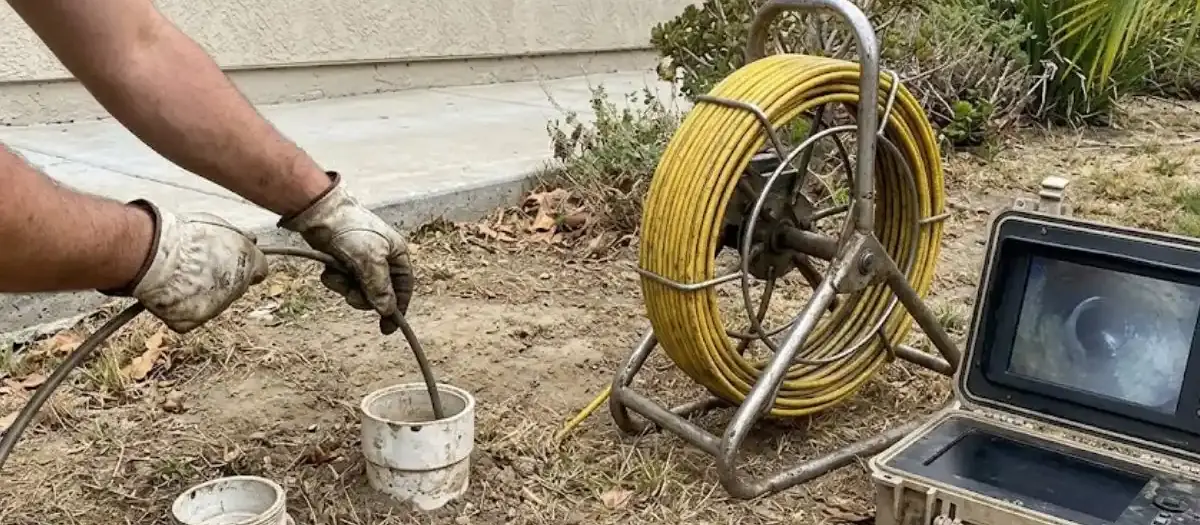
Pipes hide problems. A camera shows cracked or offset joints, roots, grease buildup, bellies where water sits, and sections of different pipe material. It also confirms whether a recurring clog is a cleaning issue or a repair issue.
That information saves money. Without it, repairs are guesses and cleaning can become a monthly habit.
When to book an inspection
Inspections are useful in more situations than a backup.
- Buying an older home and wanting to know the condition of the main line.
- A drain that keeps clogging after cleaning.
- Before landscaping or building over a sewer path.
- After a sewage backup, to find the cause.
- Before a major renovation that adds fixtures to the line.
Buying or troubleshooting?
Call and we will schedule a camera inspection and walk you through the footage.
What the camera can find and what happens next
Findings drive the next step.
| Finding | What it means | Likely next step |
|---|---|---|
| Roots at joints | Small cracks letting roots enter | Cutting, jetting, possible spot repair |
| Offset joint | Pipe sections have shifted | Spot repair or lining |
| Belly (low spot) | Water pools and solids collect | Monitor or replace the section |
| Grease and scale | Coating narrowing the pipe | Hydro jetting |
| Collapse | Pipe has failed | Sewer line repair |
Inspecting before you buy a house
A general home inspection rarely includes the underground sewer line. In an older neighborhood, that line could be several decades old and made of cast iron, clay or early plastic.
A camera inspection during the due diligence period can reveal a six-figure surprise or a clean bill of health. Ask us for a written summary and a copy of the footage to share with your agent.
Finding where the line runs
If you do not know where your cleanout or main line sits, we can locate it as part of the inspection. A locator on the camera shows the pipe's path and depth from above ground, which helps with planning an addition or tree work.
What you receive after an inspection
We give you the video, a note of any defects and how far from the cleanout they sit, the pipe material we saw and the depth where the locator could read it. If the line is clean and sound, you get a clear statement of that. If we find a problem, we explain the options and the order in which to handle them.
A report is useful long after the visit. It tells you what to watch, helps another plumber plan a repair and gives a buyer or an insurer a record of the line's condition on that day.
Preparing for an inspection
A little preparation speeds up the visit.
- Find your cleanout, usually a capped pipe in the yard or near the foundation.
- Clear space around it so the equipment can be set up.
- Run the washer or flush toilets only if we ask.
- Tell us about past backups, roots or repairs.
- Plan for about an hour, longer if the line is long or blocked.
Inspection versus cleaning
A cleaning clears a blockage. An inspection shows why the blockage happened. Many homeowners do a cleaning first and never see the pipe, then have the same problem again. If the line has backed up more than once, an inspection is the better value.
If the camera finds roots or scale, a cleaning can follow right away, and a repair can be priced from the video. See sewer line cleaning and sewer line repair for those steps.
Sources we use for inspection findings
Our findings use plain pipe terms such as crack, offset joint, root intrusion and belly. For the pipe itself we cite the material standards that apply, such as ASTM A888 for hubless cast iron and ASTM D3034 for PVC sewer pipe, so another plumber can read the report without guessing.
What shapes the cost of an inspection
We quote the inspection in writing before we start.
Sewer inspection questions
Most residential inspections take under an hour once the camera is in the line. Longer runs, difficult access or cleaning first add time.
Yes. We give you a copy of the footage and a plain-language summary of what we saw.
Not always, but it is wise before buying an older home or before building over a sewer path.
Yes, but we may need to clear it first. For an active backup, see emergency sewer line repair.
Yes. Our commercial plumbing page explains how we handle shops, restaurants and multi-unit buildings.
We inspect homes in Easley and in Pickens and Powdersville. The footage helps whether you are buying, repairing or planning an addition.