
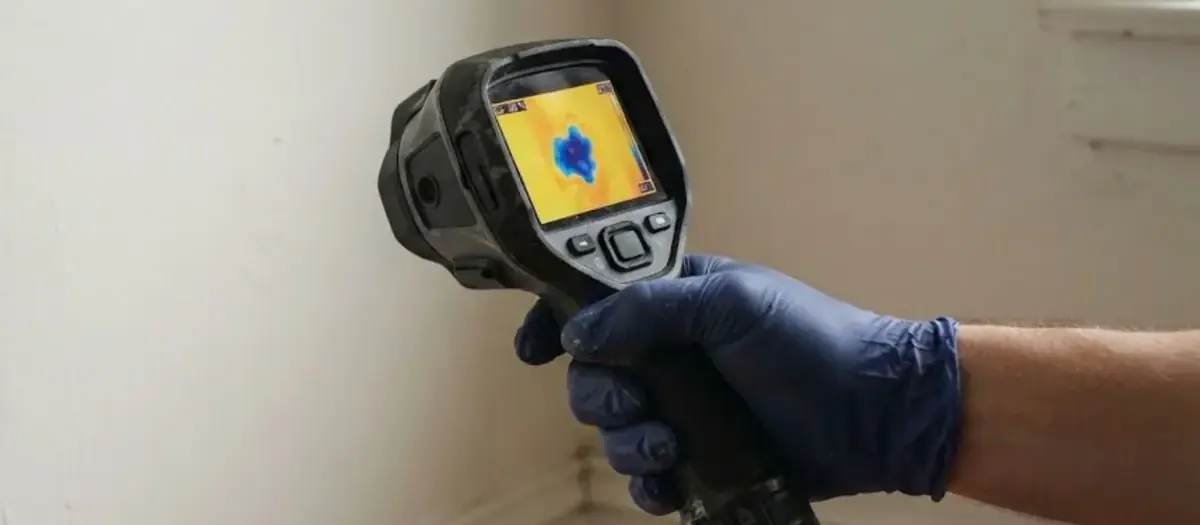
Three cameras, three jobs
A thermal imaging camera shows temperature differences on a surface. A wet area is cooler than a dry one, and a hot water leak is warmer, so a thermal image can reveal moisture behind drywall without cutting it. It does not see water itself, only temperature patterns.
A pipe inspection camera goes inside drain and sewer lines. A borescope is a thin camera that can look into a small hole in a wall or ceiling.
What each camera shows
Pick the tool by the question.
| Tool | What it shows | Best question |
|---|---|---|
| Thermal imaging camera | Temperature patterns on walls, floors and ceilings | Where is water or a warm line behind this wall? |
| Pipe inspection camera | The inside of a drain or sewer line | Is the pipe cracked, blocked or rooted? |
| Borescope | A small cavity behind an access hole | Is there water or mold in this space? |
| Acoustic listening device | The sound of a leak in a pressurized pipe | Where along this floor or wall is the pipe leaking? |
What a leak detection visit includes
The camera is one step in a sequence.
- Questions about when you noticed the problem and what changed.
- A meter test to confirm that water is moving when it should not.
- Pressure testing of supply lines to confirm a leak.
- Acoustic listening and thermal imaging to find the area.
- A pipe camera if a drain or sewer is suspected.
- A written summary of findings and repair options.
Why a camera alone is not enough
A thermal image can show a cool patch that is condensation, not a leak. A pipe camera shows the pipe but not a pressurized line behind a wall. The best results come from combining tools. A pressure test confirms a supply leak, listening narrows it and a camera confirms the cause.
That is why our leak detection page describes a method, not a single gadget. A single scan can mislead, and a combined approach saves you from opening the wrong wall.
When to call right away
If you find water spreading, a ceiling stain growing or a hot spot on the floor, close the main valve first. A leak in a slab is covered under slab leak repair, and a split pipe is under burst pipe repair.
If you simply have a high bill, run a meter test. Close every fixture and watch the meter dial. If it moves, there is a leak somewhere, and a camera visit is the next step.
Limits of camera-based leak detection
A thermal camera works best when there is a temperature difference between the wet area and the dry surroundings. In a mild, even room, a slow leak can be hard to see. Heating or cooling the room a bit can help, and a different time of day can change the picture.
Insulation, tile and metal also change how heat shows up. A tile floor over a slab can hide a cool patch, and metal ducts can create false readings. That is one reason we confirm with pressure tests and listening before cutting anything.
When a camera and a test disagree, we trust the test and look again. A careful survey takes longer than a quick scan, but it avoids opening the wrong wall.
How to prepare for a leak detection visit
A little preparation saves time on site.
- Write down when the symptoms started and what you noticed first.
- Note the water meter reading and the time.
- Clear access to the water heater, the main valve and any crawlspace hatch.
- List where you have seen stains, odors or warm spots.
- Tell us about any recent plumbing or roof work.
Drying guidance after a leak is found
The U.S. Environmental Protection Agency guidelines advise drying wet materials within 24 to 48 hours. Thermal images are a screening tool, and we confirm a finding with a pressure test before opening a wall.
What shapes the cost of a leak detection visit
We explain the price before work starts.
What this means in Easley, SC
In Easley, a high water bill is often your first clue. The city's water is supplied by Easley Combined Utilities, and the meter at the street reads what passes through your service line. If the meter moves with every fixture off, a leak is somewhere between the meter and the house or inside it.
Homes in Powdersville buy water from a separate district, so check which utility reads your meter. If the leak is in a yard, call 811 before any digging. A thermal image can miss a deep buried line, so tell the plumber if you suspect the service line.
Leak detection camera questions from Easley homeowners
A thermal camera shows temperature patterns that suggest moisture. It does not see water itself, so we confirm with other tools.
We try to avoid it. We narrow the spot first so any opening is small.
Turn off every fixture, then watch the meter dial or leak indicator. If it moves, you have a leak.
No. A pipe camera looks inside drains. A leak detector finds pressurized water lines. We use both when needed.
Yes. We use listening tools and line tracers for buried service lines.
See leak detection for how a visit works. We serve Easley, Powdersville and Liberty.